Editor’s Note: Even in light of the current de-funding proposal before us, Creative Pinellas stands firm in our commitment to driving cultural tourism.
We remain committed, as well, to supporting the cultural developments, successes, and milestones in our cultural community.
The reopening of the newly-renovated Florida Holocaust Museum — one of the largest Holocaust museums in the world — is just one example of how culture shapes tourism, and not the other way around. The Florida Holocaust Museum is a draw for heritage and historical tourism, which attracts millions of travelers to visit America’s historic places, with those travelers staying longer, spending more and traveling more often to participate in local activities.
Please enjoy this very timely story and make a commitment to visiting this newly reopened cultural treasure.
ST. PETERSBURG — The Florida Holocaust Museum has always been a place of deep
contemplation on intolerance and resilience. After a yearlong renovation, the museum gives us
even more to think about and new ways to honor the memories of the millions who died and
suffered in the Holocaust.
Now on View: Thor
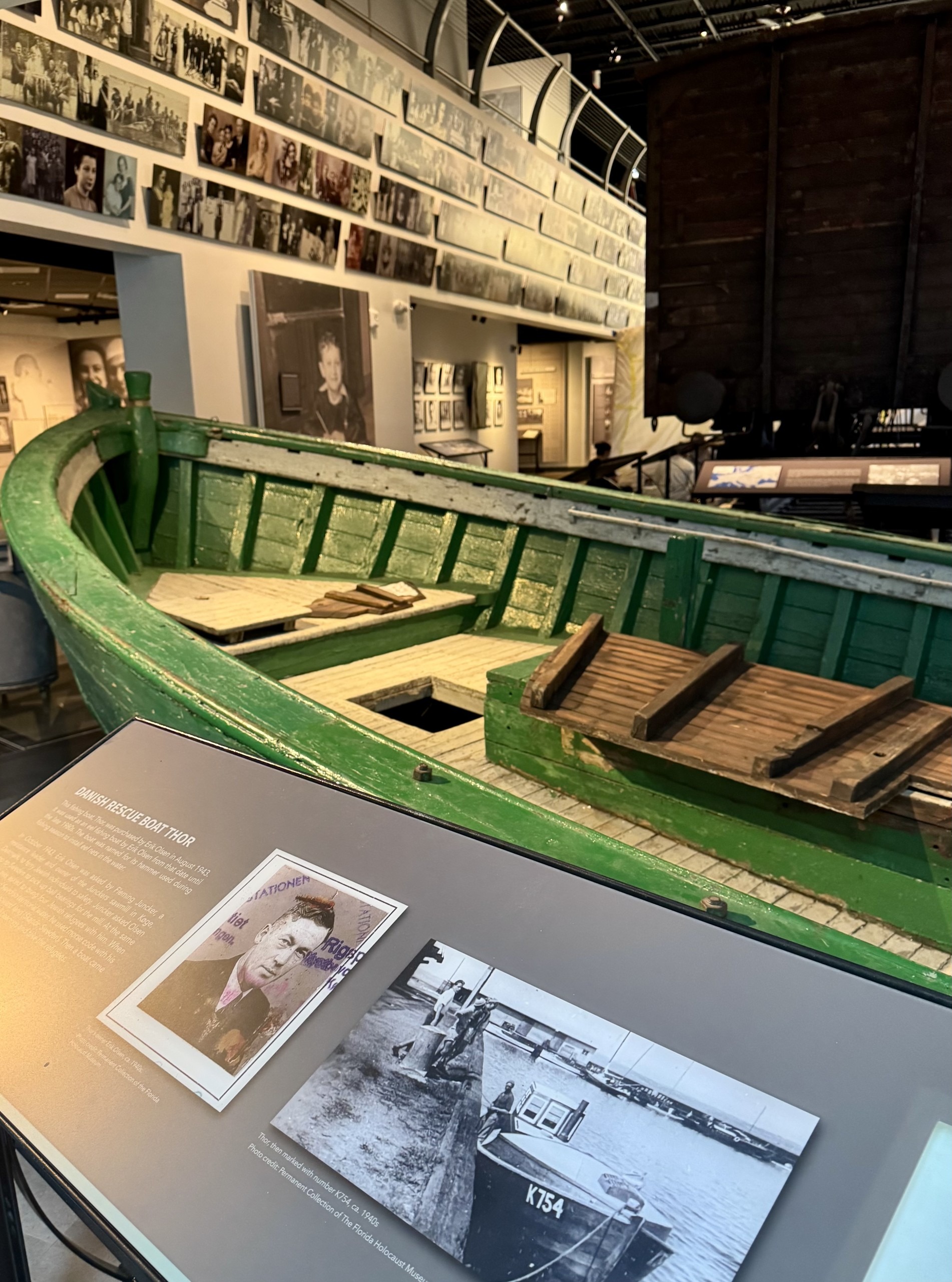
Florida Holocaust Museum in St. Petersburg. The photos that previously covered one floor-to-
ceiling wall are now spread throughout the exhibit. Photo by Janet K. Keeler.
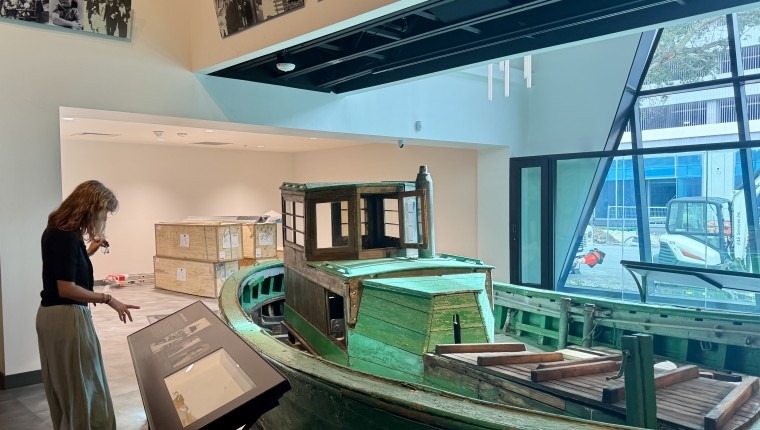
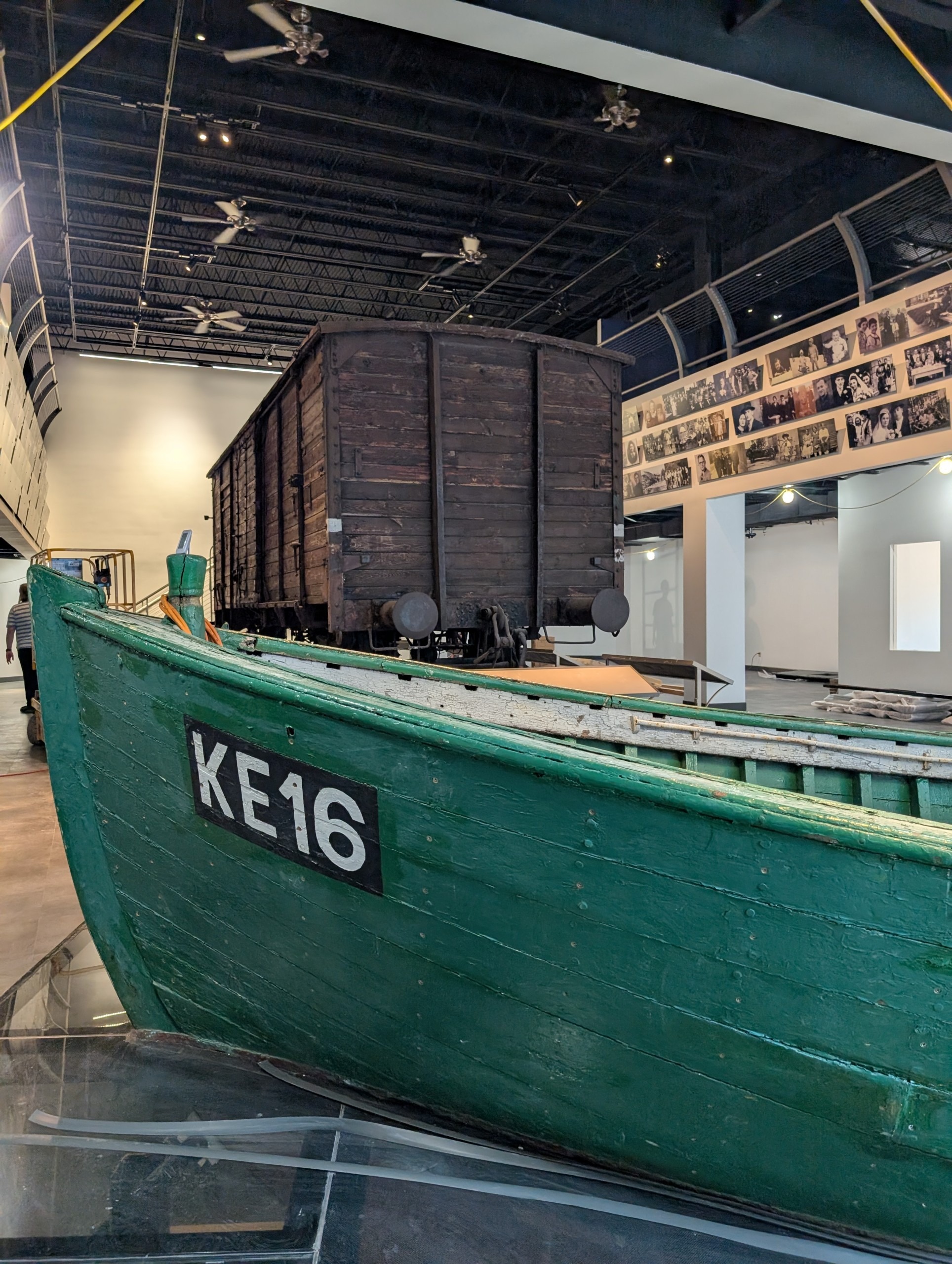
Take for example Thor, one of the museum’s newest acquisitions. The 17-foot-long wooden eel
fishing boat was part of the 1943 Danish flotilla that spirited Jewish people from occupied
Denmark to neutral Sweden.
Some 7,000 people were transported to safety across the narrow Øresund Strait. The museum has documented that a Jewish family of four crossed the 20 or so miles to freedom on Thor. It might as well have been a million miles considering the significance.
The kelly green rescue boat now sits next to boxcar #113 069-5, one of the last remaining
examples of the transport vehicles used to take Jewish people and other prisoners to death camps
during World War II.
The boxcar is displayed on Holocaust-era train tracks. It is somber. It is dark. Thor rests on glass panels with blue lights shining through to replicate water. A soundtrack of waves ripples above. There is hope. There is humanity.
A Reopening to Re-Energize Visitors
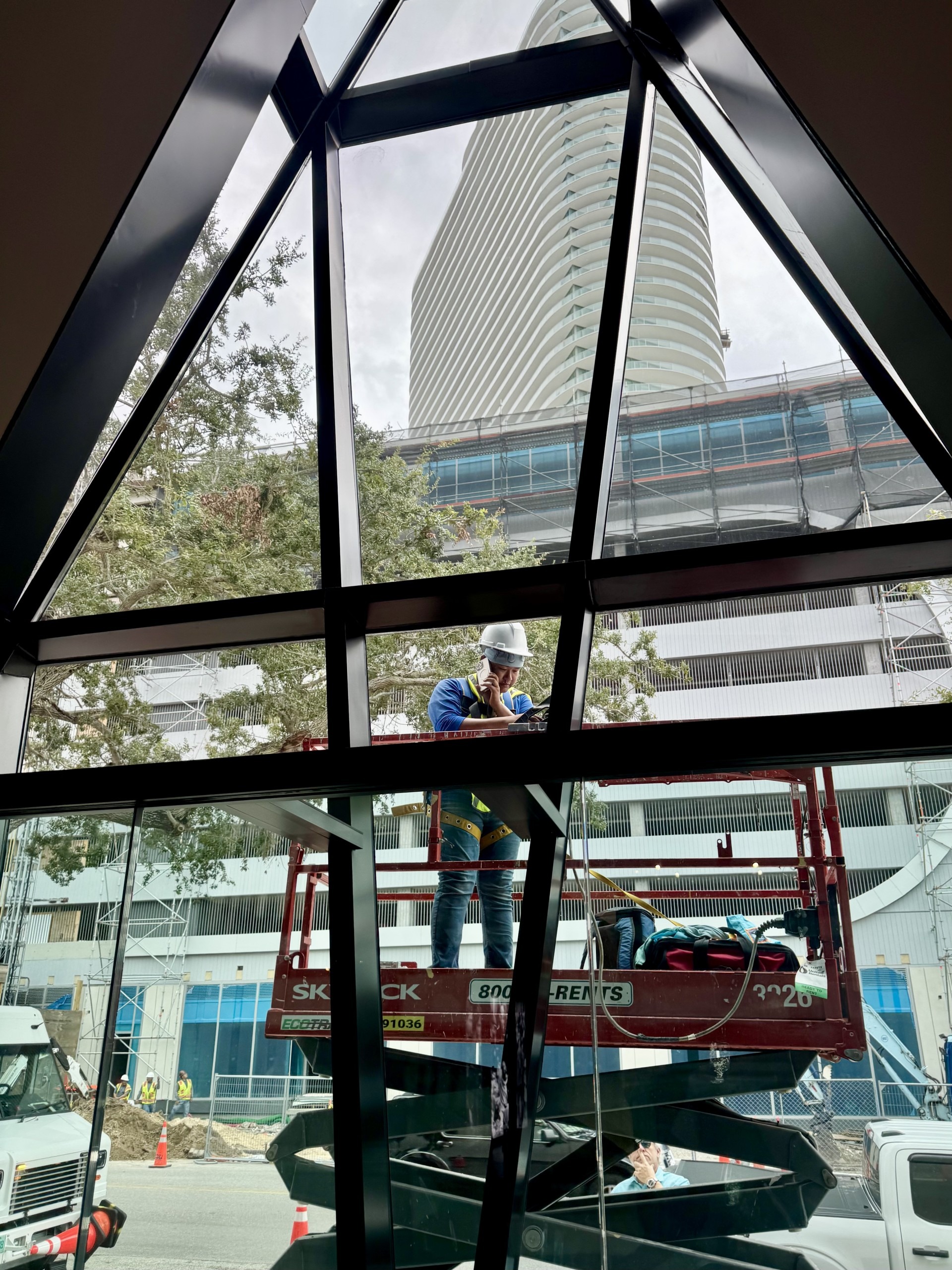
in St. Petersburg is in the spot where visitors used to enter. The entry is now at the northeast
corner of the bulidng. Across Fifth Street S, the 46-story Residences at 400 Central is also being
finished. Photo by Janet K. Keeler.
FHM closed in July 2024 to begin the first phase of its most extensive renovation since it opened
in 1998. The museum reopens to the public from 2 to 5 p.m. Sept. 9 with a ticket and there is free
entry all day on Sept. 10; after that, regular admission prices apply.
To date, $8.8 million in public and private money has been invested to strengthen facilities and security, and to enhance the visitor experience with some reorganization of the facility, new exhibits and a third-floor outdoor terrace.
Public funding has come from the Florida Department of Education, the Florida Department of
State, and the Florida Division of Emergency Management.
“My hope for the Florida Holocaust Museum’s reopening is that it will reenergize our
community’s commitment, inspiring each person to make a difference in their own corner of the
world,” said Eric Stillman, new museum president and CEO, in a prepared statement.
One big change for visitors is the clear-bag policy. No backpacks, purses or large bags will be
permitted into the facility. This policy is similar to what is enforced at many sports stadiums.
Medical equipment and diaper bags are the exceptions and they will need additional screening.
The first phase of the renovation includes a new entrance at the northeast corner of the building.
The previous entrance under the soaring, triangular windows has been remodeled for Thor.
After visitors clear security, they are guided into a mostly pictorial timeline of the Jewish experience before the war, leading to the Holocaust and aftermath. Besides photos, visitors will see
enhanced displays of the striped prisoner uniforms, shoes that were forcibly taken and discarded,
and other artifacts.
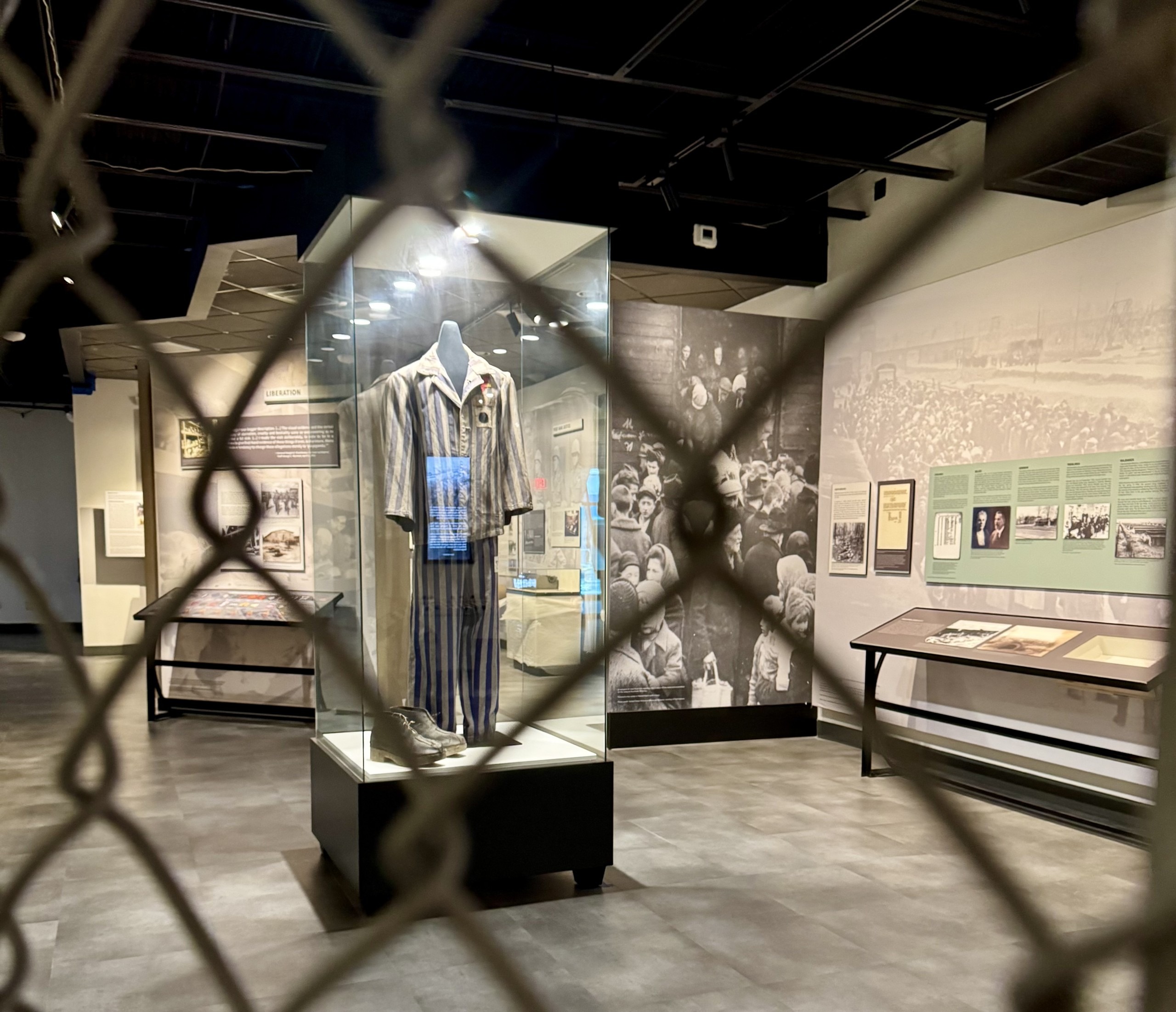
Sets You Free) sign, they will see an enhanced display of the striped uniform that prisoners
were required to wear. Additional lighting and the ability to walk around the exhibit provides a
new experience. Photo by Janet K. Keeler.
Then comes the boxcar and the rescue boat. The two-story-high space is surrounded by photos of
weddings, school days, birthday parties, anniversary gatherings and people at play. For people
who have been to the museum before the renovation, they will remember these photos displayed
floor-to-ceiling next to the box car. That is where the stairs to the second floor are now.
Melissa Allen, director of marketing and engagement, said that the new flow toward the box car
and Thor is meant to emphasize the everyday lives of people before the Holocaust. We now see
them as parents and schoolkids, lovers and neighbors before we see them as victims of atrocity.
I’ll Have What She’s Having
The new stairs lead to the second-floor exhibition space where “I’ll Have What She’s Having:
The Jewish Deli” explores the ways that food tells the story of immigration, adaptation and
community.
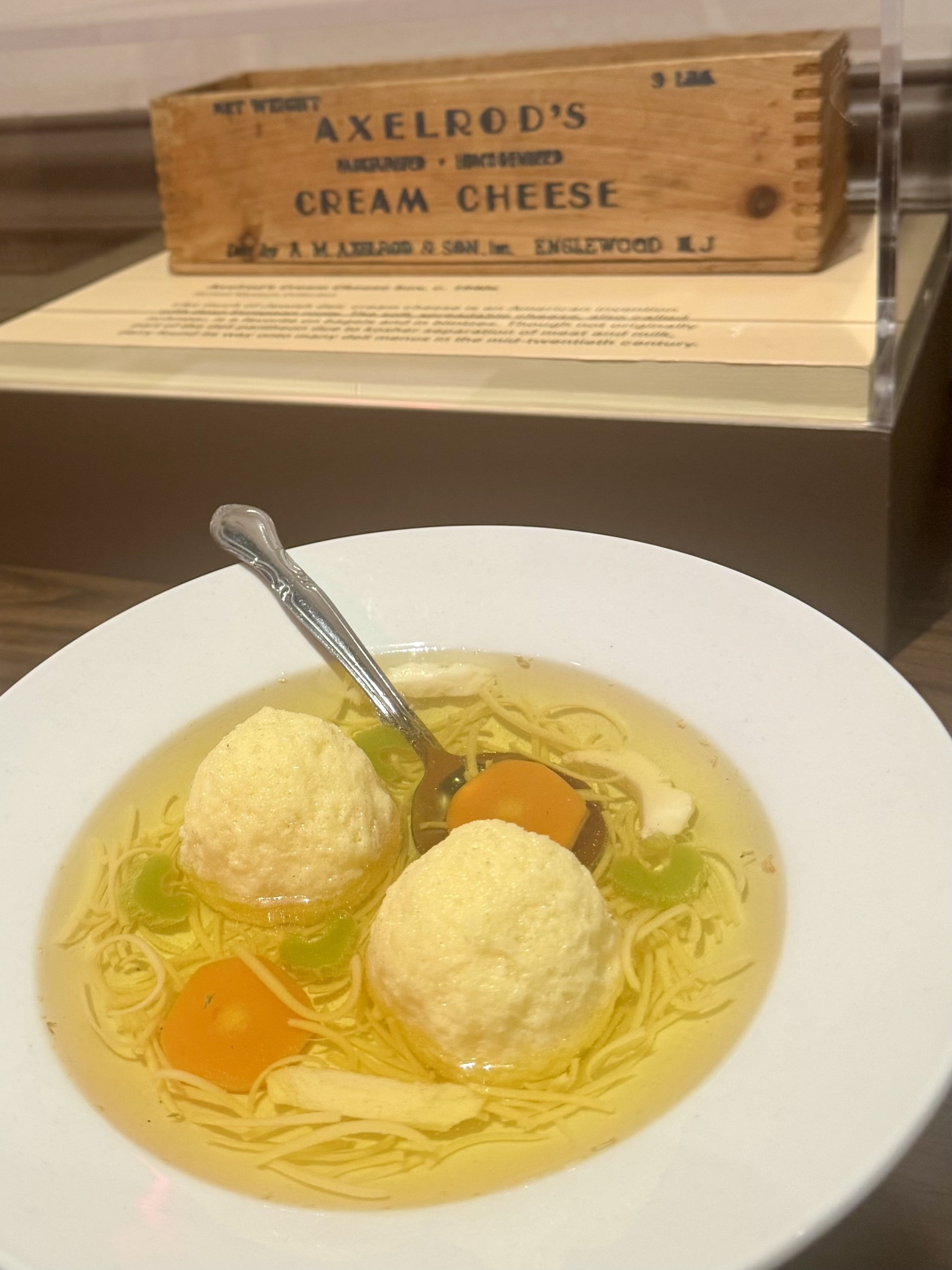
part of the exhibit “I’ll Have What She’s Having: The Jewish Deli,” along with cheesecake and
bagels with lox. The exhibition runs through January at the Florida Holocaust Museum in St.
Petersburg. Photo by Janet K. Keeler.
The name is from the legendary line in the movie “When Harry Met Sally” from a
scene shot in Katz’s Delicatessen in New York. And at the end you can pull up a seat and watch
monitors playing snippets of deli food references from “Curb Your Enthusiasm,” “The Marvelous
Mrs. Maisel” and “Seinfeld.” Who could forget the marble rye episode?
The museum added a local touch to the exhibit with photos and ephemera from Katz Grocery,
which opened in the 1930s at what is now the eastern edge of the parking lot at Tropicana Field.
Katz, along with other businesses and homes, was part of the Gas Plant neighborhood razed in
the 1980s to make way for the stadium.
“I’ll Have What She’s Having” was organized by the Skirball Cultural Center in Los Angeles
and will be on view through January.
A Treasure Trove of Artifacts
Also upstairs, the next phase of the renovation will include the completed Wiesel Collection,
showcasing the museum’s treasure trove of artifacts from author and Nobel laureate Elie Wiesel.
The FHM was chosen in 2024 to be the permanent home of the Holocaust survivor’s effects,
including the contents of his personal office and library, unfinished manuscripts, letters, Nobel
medal and more.
While FHM will have the tangible artifacts, the Nelson Poynter Memorial
Library at University of South Florida, St. Petersburg, will house the digitized collection.
For now, visitors can get a preview of the Wiesel Collection, with some selected items on view.
In a preview of the renovated museum in August while the walls of this area were still being
painted, registrar and collections manager Clayton Richards said the FHM has received more
than 900 boxes of uncatalogued artifacts. It will take time, he said, to assess them all. Many of them contain books and they have already found interesting notes and notations in some of them.
Wiesel had a longtime connection with St. Petersburg. He taught at Eckerd College for decades
and cut the ribbon at the opening of the museum.
Dimensions in Testimony
Near the Wiesel preview is Dimensions in Testimony exhibit, an innovative experience that
allows visitors to “interact” with Holocaust survivors. Museum officials emphasize that AI is not
used in the exhibit, which was developed in conjunction with the USC Shoah Foundation.
Using 2021 interviews with four local Holocaust survivors, developers were able to edit the
videos to anticipate questions that visitors might ask. For instance, a visitor might come to the
podium and ask something like, “How old were you during the Holocaust?” or “What was it like
in the camp?”
The videos have been edited and programmed using natural language processing
techniques to provide an answer from either Mary Wygodski, E. Edward Herman, Helen Kahan
or Betty Grebenschikoff, all survivors who eventually moved to St. Petersburg.
Since those 2021 recordings, two of the survivors have died. Grebenschikoff passed away in
2023 at the age of 93 and Kahan died on Aug. 29 at 102.
Their stories, and that of many, many others, live on at the Florida Holocaust Museum.
“The lessons of the Holocaust are not just history, they are urgent reminders about the
consequences of hatred and the power of standing up for what is right,” Stillman said.
What to Know If You Go
The renovated museum reopens 2-5 p.m. Tuesday, Sept. 9 with price of admission. Duke Energy Free Day is 10 a.m.-5 p.m. Wednesday, Sept. 10. Regular hours are 10 a.m.-5 p.m. daily; closed holidays.
$25 general; $18 seniors, educators and students, active-duty military, law enforcement and veterans; free for members and children under six. There is limited free parking behind the museum and in the alley to the north. There is metered parking on the streets surrounding the museum which can be paid at meters or through mobile parking apps such as ParkMobile. The Florida Holocaust Museum. 55 Fifth St. S, St. Petersburg. 727-820-0100. thefhm.org